


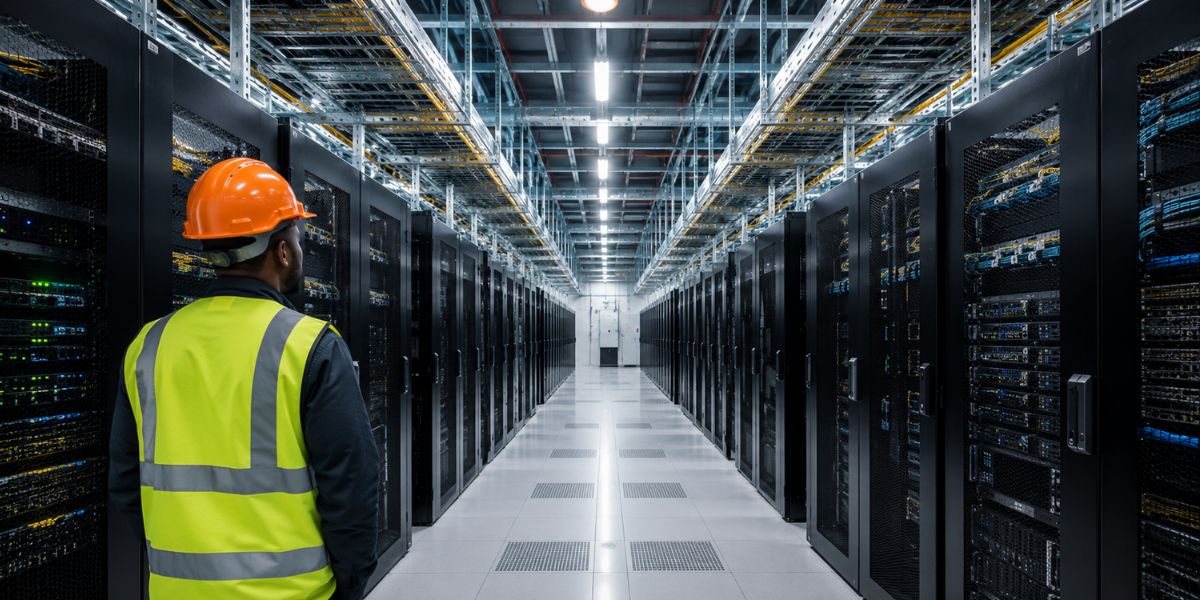
Critical infrastructure is expected to last far longer than the technology it supports.
While servers, networking equipment and security technologies may be refreshed every few years, the physical infrastructure beneath them is expected to support decades of operational change. That means today’s infrastructure must do more than support current operations. It must be designed to accommodate changing technologies, increasing capacity requirements and the evolving demands of modern enterprise environments.
Whether supporting a data centre, a manufacturing facility, a logistics hub or a corporate campus, the physical infrastructure that underpins these environments plays a fundamental role in business continuity. Decisions made during the planning and design phase can influence operational performance for many years to come.
Organisations that take a long-term view of infrastructure planning are better positioned to expand capacity, modernise technology and maintain operational resilience without unnecessary disruption.
Looking Beyond Today’s Requirements
Infrastructure projects are often driven by an immediate requirement—building a new data centre, upgrading a server room, expanding surveillance coverage or installing additional structured cabling.
While addressing today’s needs is essential, focusing solely on current requirements can create challenges later.
Critical infrastructure assets such as structured cabling systems, containment, power distribution, cooling systems and integrated security environments are long-term investments. Unlike active technology, which may be refreshed every few years, these foundational systems are expected to support multiple generations of equipment and operational change.
Considering future capacity during the design stage helps create an environment that can evolve as operational requirements change, reducing the need for significant redesigns or disruptive upgrades later.
The Hidden Cost of Under-Designed Infrastructure
Infrastructure rarely reaches its limits overnight.
Capacity constraints often develop gradually as equipment is added, technology evolves and facilities grow in complexity.
The real cost of under-designed infrastructure is rarely the infrastructure itself. It is the disruption and additional expense that arise when environments can no longer adapt to changing operational requirements.
Common hidden costs include:
- Unplanned downtime during infrastructure upgrades or reconfigurations.
- Operational disruption as routine changes become more complex and time-consuming.
- Expensive retrofit projects to accommodate additional power, cooling, cable pathways or equipment.
- Higher installation and labour costs as engineers work around existing infrastructure constraints.
- Delayed technology deployments because the supporting infrastructure is no longer capable of accommodating new equipment.
- Increased operational risk as infrastructure is pushed beyond its original design capacity.
By contrast, infrastructure designed with appropriate capacity and flexibility can accommodate change more efficiently throughout its lifecycle.
Scalability Starts During the Design Phase
Scalability is not simply about installing more infrastructure than is currently required. It is about making considered engineering decisions that allow environments to evolve without compromising performance or reliability.
This may include allowing for future cable pathways, designing containment systems that can support additional services, planning for increased power and cooling requirements, or ensuring sufficient space for future equipment installations.
Every environment is different. A hyperscale data centre, a financial institution, a manufacturing facility and a logistics operation each have unique operational requirements. Effective infrastructure design considers both current operational objectives and the demands that may arise over the life of the facility.
Good infrastructure planning isn’t about predicting the future. It’s about ensuring your infrastructure has the flexibility to adapt when operational requirements inevitably change.
Growth Impacts Every Layer of Critical Infrastructure
As operational requirements evolve, infrastructure demands extend far beyond the technology itself.
Within data centre environments, increasing equipment density — driven in part by growing compute and AI workloads — may require additional power capacity, enhanced cooling and careful space planning to maintain performance and uptime.
Structured cabling systems must support higher bandwidth requirements while remaining organised, accessible and capable of accommodating future expansion.
Integrated security environments often evolve alongside facilities, requiring additional surveillance, access control and monitoring capabilities that integrate seamlessly with existing infrastructure.
Because these systems are interconnected, a change in one area often affects another. Adding higher-density equipment may require additional cooling, increased power capacity and changes to containment or cabling pathways. Considering these dependencies during planning helps reduce future complexity and supports more efficient infrastructure upgrades.
Considering these systems as part of a connected infrastructure ecosystem rather than individual projects helps create environments that are easier to maintain, expand and support over time.
Engineering Expertise Makes the Difference
Building infrastructure for long-term operational success requires more than quality products and installation expertise.
It begins with understanding how facilities are expected to operate today and how they may evolve tomorrow.
Engineering is about asking the right questions before installation begins—not simply selecting products.
Experienced engineering teams consider capacity, resilience, maintainability and lifecycle performance from the earliest planning stages. This enables infrastructure solutions that not only meet current operational requirements but also provide the flexibility to adapt as technology, facilities and operational priorities change.
An engineering-led approach helps reduce complexity, minimise risk and support informed investment decisions throughout the infrastructure lifecycle.
Building for the Long Term
Critical infrastructure forms the foundation of every connected environment.
When it is thoughtfully planned and professionally engineered, it enables organisations to adapt to changing operational demands, modernise technology with confidence and maintain the resilience required to support business-critical operations.
At Advanced Infrastructure, we help organisations across South Africa plan, design, implement and support data centre infrastructure, structured cabling and integrated security environments that are engineered for long-term operational performance.
The first step is understanding the current state of your infrastructure. A professional infrastructure assessment can identify capacity constraints, operational risks and opportunities to support future operational requirements—before they become costly business challenges.
If you’re planning your next infrastructure project or assessing the capacity of an existing environment, speak to our team about designing infrastructure that supports both today’s requirements and tomorrow’s operational demands.